

Photo: Cinema Shift Festival 2026
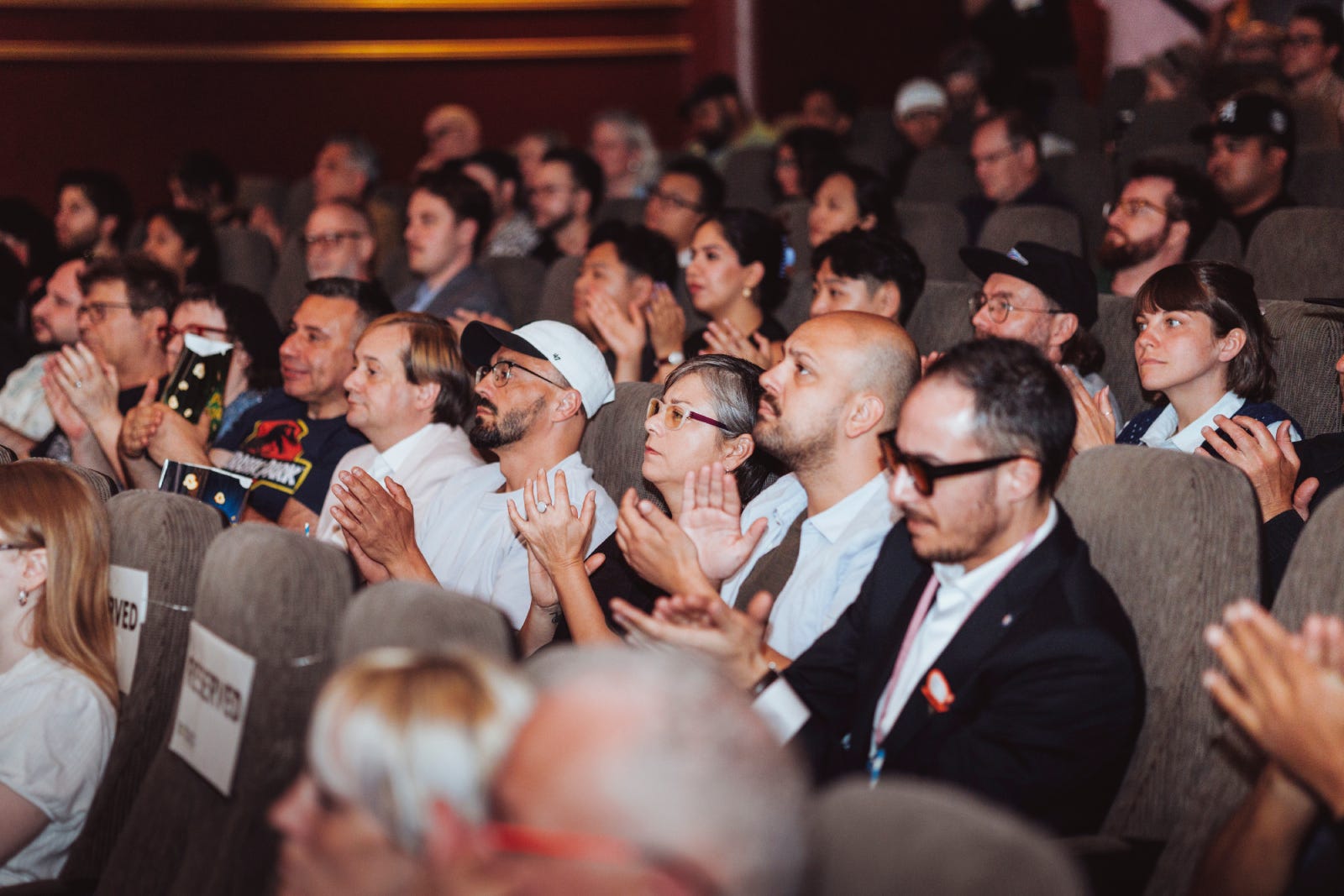
Cinema Shift Festival took place on June 5 at Hot Docs Ted Rogers Cinema. We were sold out, and people were eager to hear and see - more than half of our audience was from the film industry, while others came mostly from creative industries and academia. Ruza’s speech (she is our executive director) hinted at what to expect. Among other things, she said:
For some of you, Canada is the country where you were born. For some of us, it is the country we chose. But for all of us in this room, it is a country whose future we care about deeply.
And if AI is going to shape that future, then this conversation cannot belong to only one industry, one discipline, or one point of view.
That is why Cinema Shift exists.
The conversation took place immediately after that, but today I want to talk about the films we screened and what that looked like, as it was the first time for some people to watch AI-assisted movies and, for others, their first time seeing them on the big screen.
I saw them so many times before the screening, just trying to make sense of which goes where. As a jury (Ann Marie Fleming, Samantha Wan, Fabio Montanari and me), we agreed that Grandmère should go first and Sinuca de Bico last. I love Grandmère, it’s such a gentle ode to grandparents. I loved it because the film blends real Super 8 footage with AI-generated imagery, and I have 8mm footage from the seventies - me on the Croatian coast. It was relatable on more than one level.
Putting all the in-between movies in order was hard work. The lineup needed to be an emotional journey, guiding the audience from grief and loss to laughter and action and back. And it was a rollercoaster. I loved how the audience laughed at Dial-A-Mate, directed by Pixar veteran Catherine Hang-Hicks - characters were so familiar and fun, and the dialogue was cleverly written. I loved that one immediately because one of the characters reminded me of Jim from The Office.
We knew that Hard Dayzzz would do well - it’s about the fly that everybody wants to kill - and you are cheering for the fly, yelling you can do it, you little fly! It’s a great example of a movie where you are immediately for the main character. It worked well as one of the opening movies.
How serious work can be, we saw in many films, the longest one being Legend, made by local Torontonians, directed by Ryan Patterson and produced by Alana Robshow. It was the longest movie we showed - 19 minutes - so I put When is it yours before and Dial-A-Mate immediately after. The audience needs to breathe after longer or heavier movies.
Interestingly, when I talked with audience members at our mixer, everybody had their favourite and each one connected with a different movie for a different reason. Because films were personal. When filmmaker Ann Marie Fleming (with 18 films at TIFF) was asked during Jury Talks at the festival whether she was surprised by how deeply personal so many of the AI-assisted films felt, she said, “No.” No matter the tools, filmmakers most often explore their stories. Many of the films felt eager to be on the screen.
After the film screening, some people told us they thought one of the movies was live-action. Others thought the real 8mm footage of Grandmère was AI-generated. That one was a real 8mm that the author’s grandfather recorded. Were films perfect? No. But (almost) nothing that humans do is.
Later on, I talked with people about stories and emotions, not tools. People connected with human experiences, and I will not lie - for a festival centred on AI-assisted filmmaking, that felt like the best possible outcome.
See the official selection at:
https://www.cinemashiftfestival.com/films