

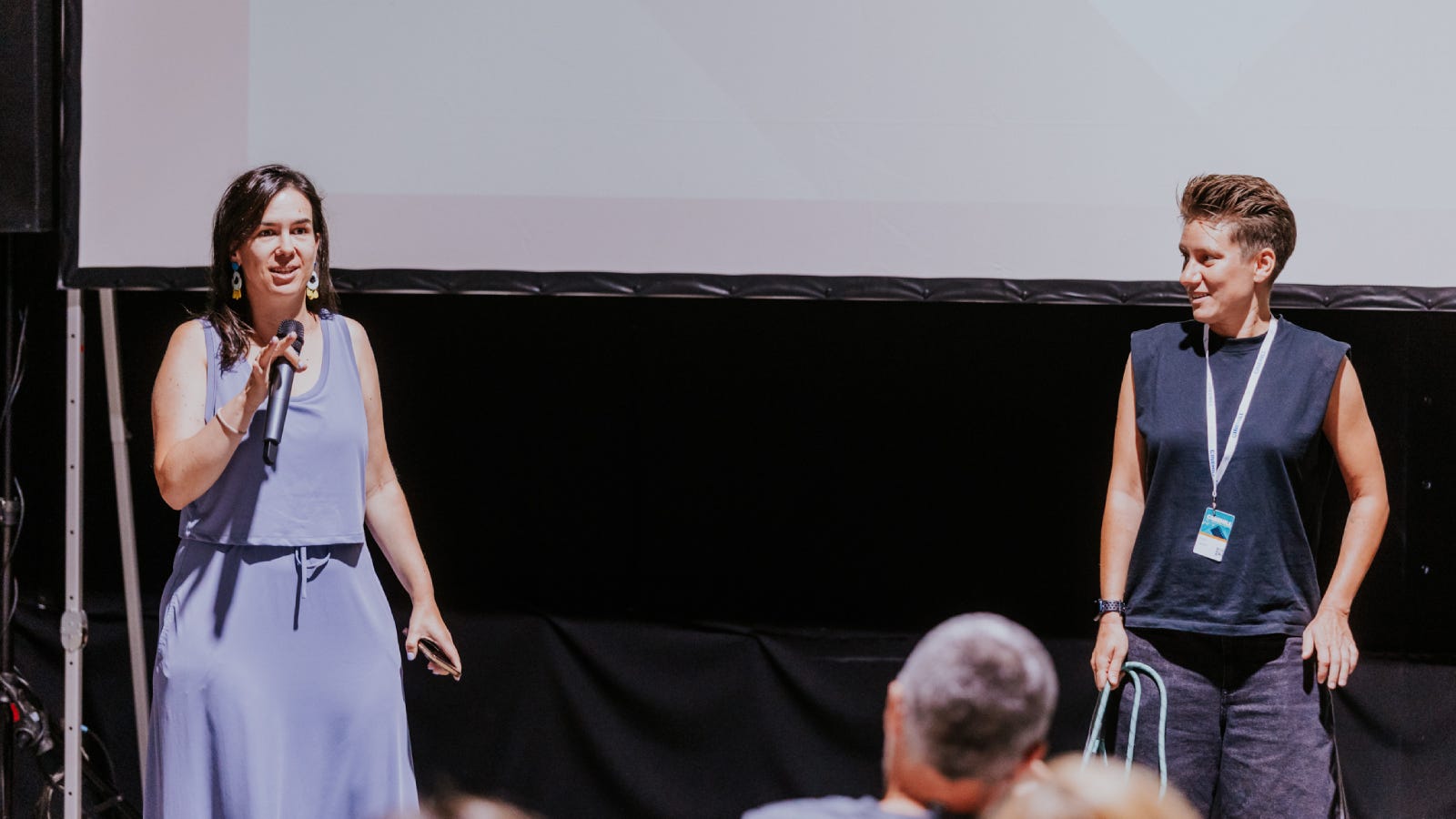
Ruza Vrdoljak Licina and Milena Zajović at Cinehill (Photo by Samir Cerić-Kovačević)
I'm sitting in the front row in the main square of the medieval Croatian town of Motovun. The sky is dark and full of stars. Suddenly, they're overpowered by a big, bright cinema screen. The film starts - it’s Run Lola Run. It's 1999, the first year of the Motovun Film Festival.
Motovun is a small hill town in Istria – often called Croatian Tuscany – surrounded by walls, with cinemas scattered across the town, indoors and outdoors, screening films late into the night. I worked on the festival for a few years (mostly on the website - I still have the 1999 version on my cloud storage) and kept returning for more than a decade. For a time, it felt like Croatia’s Sundance; The Guardian once described it as “a cross between Glastonbury and Sundance.” It drew names like Paul Thomas Anderson and Mira Furlan, but also tens of thousands of visitors each year. More importantly, it helped create a younger Croatian audience for independent cinema.
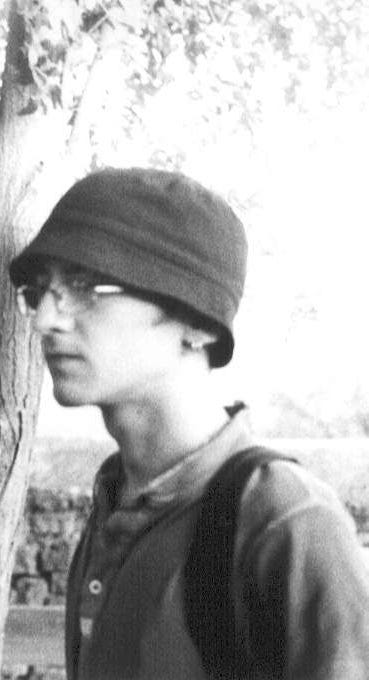
Me at the 1999 Motovun Film Festival (Photo by Vladimira Spindler)
For me, Motovun was formative. Five or six days in a small town on a hill with fellow film lovers shaped how I see film festivals and what I believe they should be. Both Ruza (Cinema Shift’s Executive Director) and I were frequent visitors, and it’s impossible not to see echoes of Motovun in how we imagine Cinema Shift: serious but informal, grounded in film, not hype.
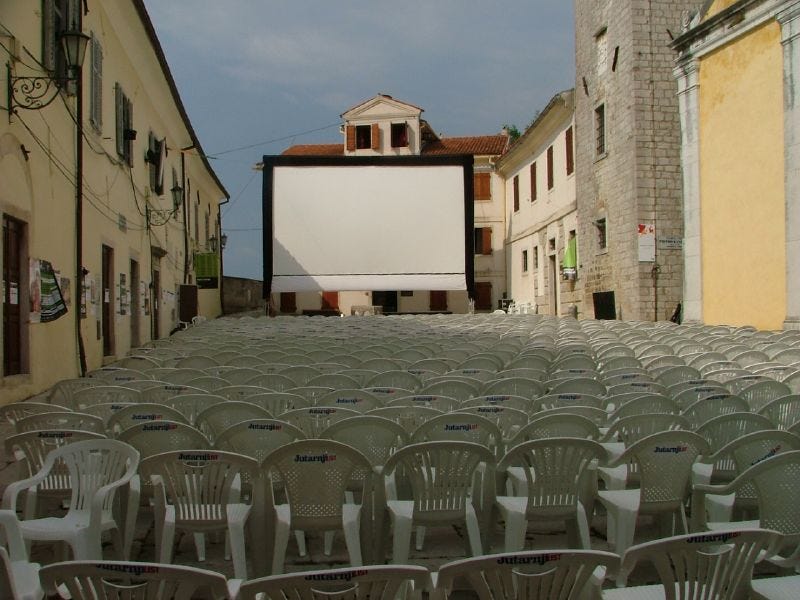
The main square cinema at the Motovun Film Festival, early 2000s (Photo by Boris Licina)
In 2023, Motovun rebranded to Cinehill and moved to a different part of the country. This year, Cinema Shift Festival was a guest at that new iteration.
From Motovun’s hill to Cinehill’s forest
Cinehill’s new home is Gorski Kotar, a forested mountain region with a high concentration of bears and a wilderness that feels oddly close to parts of Canada. The main festival area sits in the woods, next to a lake, with three theatres clustered together, a fire pit, canteen, merch store, press office, and stage.


Photos by Samir Cerić-Kovačević and Cinema Shift
One evening, I find myself in one of the theatres watching Los Tigres, a Spanish film with spectacular cinematography (Jury Prize for Best Cinematography at San Sebastián) and the kind of story I like – drug smuggling (if you love drug-smuggling stories, watch Italian ZeroZeroZero and Spanish Fariña). After the screening, it’s cold enough for Canadian fleece. Ruza and I talk to film professionals around the fire, then walk fifteen minutes through the forest to another cinema to catch Koke, a brilliant Croatian film that is strongly rooted in its local setting yet sharply written and beautifully acted.
Through all of this, the core idea of Cinehill remains the same: the program is primarily dedicated to films from small cinematographies and independent productions; films with innovative approaches, strong ideas, and intense stories that often struggle to reach theatres and wide audiences in an unequal market.
Where Cinema Shift fits in
In many ways, we recognized ourselves in that mission. The AI‑assisted films we screen at Cinema Shift are small, independent, and deeply personal. There is a difference, though: these films don’t yet fight for theatrical space in the same way. Many find their audiences through YouTube and other online platforms instead of cinema schedules.
At Cinehill, we screened a selection of films from Cinema Shift’s program to show how varied AI‑assisted storytelling can be. Among the themes explored were grief in Memento Mori (a film that feels very personal to me) and nostalgia in Grandmère, which the audience informally voted as their favourite.
After the movies, in a one-on-one talk with Milena Zajović, Cinehill’s creative director and selector of the main program, Ruza Vrdoljak Licina touched upon many subjects - from debunking the one-click movie myth to European Union AI policy, the Canadian AI filmmaking scene, and how AI is helping underrepresented communities to make films. It was also emphasized that AI is just a tool, and stories are human.
Why this matters for filmmakers
Public discussion around AI in filmmaking is still developing in Croatia, and it’s encouraging to see an indie festival like Cinehill start to open that space. AI‑assisted films can find audiences online, but festivals like Cinehill can connect them to a different group: audiences outside the AI filmmaking community.
The event at Cinehill was supported by the Embassy of Canada to Croatia and Kosovo, whose presence helped anchor this conversation between festivals, countries, and different traditions of filmmaking.
Being at Cinehill felt rewarding personally and professionally, especially seeing how far we have come from the first Motovun Film Festival and how - although tools have changed - story is still at the centre of independent filmmaking.